PixelPappa
WorkServicesAboutBlogTraining
Contact
Talkr AAC Speech App

Talkr

A communication tool
for non-verbal users

Talkr helps non-verbal people communicate using pictures and speech. Whether the person you support has autism, aphasia, ALS, a stroke recovery, or any other communication difference, Talkr gives them a voice.

Tap a picture, hear the word. Build sentences. Express needs, feelings, and ideas, without a waiting list, without a prescription, without a price tag that locks families out.

Built by a parent,
for families

I’m a father whose daughter uses AAC every day. I know the frustration of expensive, complicated speech apps and the long waiting lists for prescribed devices.

Talkr is different: simple, fast, and affordable, available the moment you need it. No prescription, no professional gatekeeping, no months of waiting for hardware that may not even fit how your loved one communicates.

I built the app I wished existed when my own family needed it.

2 min
To get started
3,400+
Illustrations included
3
Platforms (iPhone, iPad, Android)

Talkr vs other AAC options

When choosing an AAC tool, families typically weigh three options: the public health route (free but slow), a dedicated AAC device (purpose-built but expensive), and a modern AAC app like Talkr (flexible, ready in minutes, runs on the phone or tablet you already own).

Attribute
Talkr
App on phone or tablet
Public AAC system
Public health route
Dedicated AAC device
Private purchase
Getting started
Time to start2 minutes6 to 18 months (assessment + approval)Weeks (private order and delivery)
Prescription requiredNoYesNo
Upfront costGenerous free tierFree (publicly funded)From ~$4,500
Ongoing
Monthly costOptional Pro from 59 kr/moNoneNone after purchase
Cross-platformYes, phone and tabletProvided device onlyNo, dedicated hardware
Localisation and sharing
LanguagesEnglish and SwedishSwedishVaries by product
Family and caregiver sharingIncluded freeLimitedLimited
Cloud backup and syncIncluded freeVaries by regionVaries by configuration

Talkr

App on phone or tablet

Getting started

Time to start
2 minutes
Prescription required
No
Upfront cost
Generous free tier

Ongoing

Monthly cost
Optional Pro from 59 kr/mo
Cross-platform
Yes, phone and tablet

Localisation and sharing

Languages
English and Swedish
Family and caregiver sharing
Included free
Cloud backup and sync
Included free

Public AAC system

Public health route

Getting started

Time to start
6 to 18 months (assessment + approval)
Prescription required
Yes
Upfront cost
Free (publicly funded)

Ongoing

Monthly cost
None
Cross-platform
Provided device only

Localisation and sharing

Languages
Swedish
Family and caregiver sharing
Limited
Cloud backup and sync
Varies by region

Dedicated AAC device

Private purchase

Getting started

Time to start
Weeks (private order and delivery)
Prescription required
No
Upfront cost
From ~$4,500

Ongoing

Monthly cost
None after purchase
Cross-platform
No, dedicated hardware

Localisation and sharing

Languages
Varies by product
Family and caregiver sharing
Limited
Cloud backup and sync
Varies by configuration

Prices and lead times are approximate and may change.

Already have a speech therapist? Mention Talkr to them. Therapists can sign up for a free Pro account to support their families.

Beta

Join our beta, help us improve Talkr

Talkr keeps improving based on what families and therapists tell us. Sign up to share what’s working, what isn’t, and what would make a real difference for your child or client.

Key features

  • Picture-to-speech

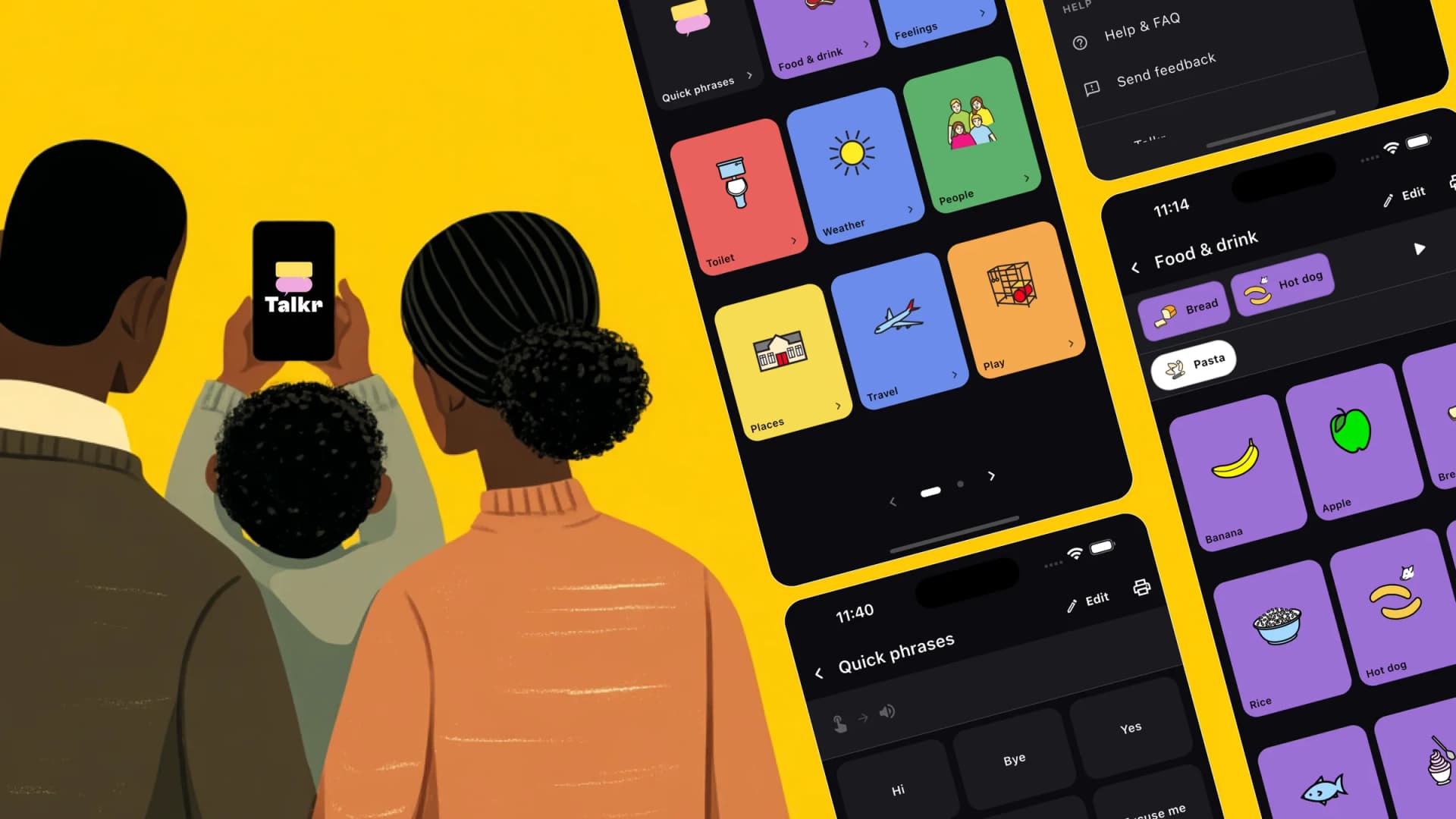
    Tap a picture, hear the word spoken out loud. Combine words to build full sentences.

  • 3,400+ illustrations

    A rich AAC library with multilingual search. Add your own photos and recordings.

  • Quick Phrases

    30 ready-made everyday phrases to say what you need without building each sentence from scratch.

  • Smart sentence prediction

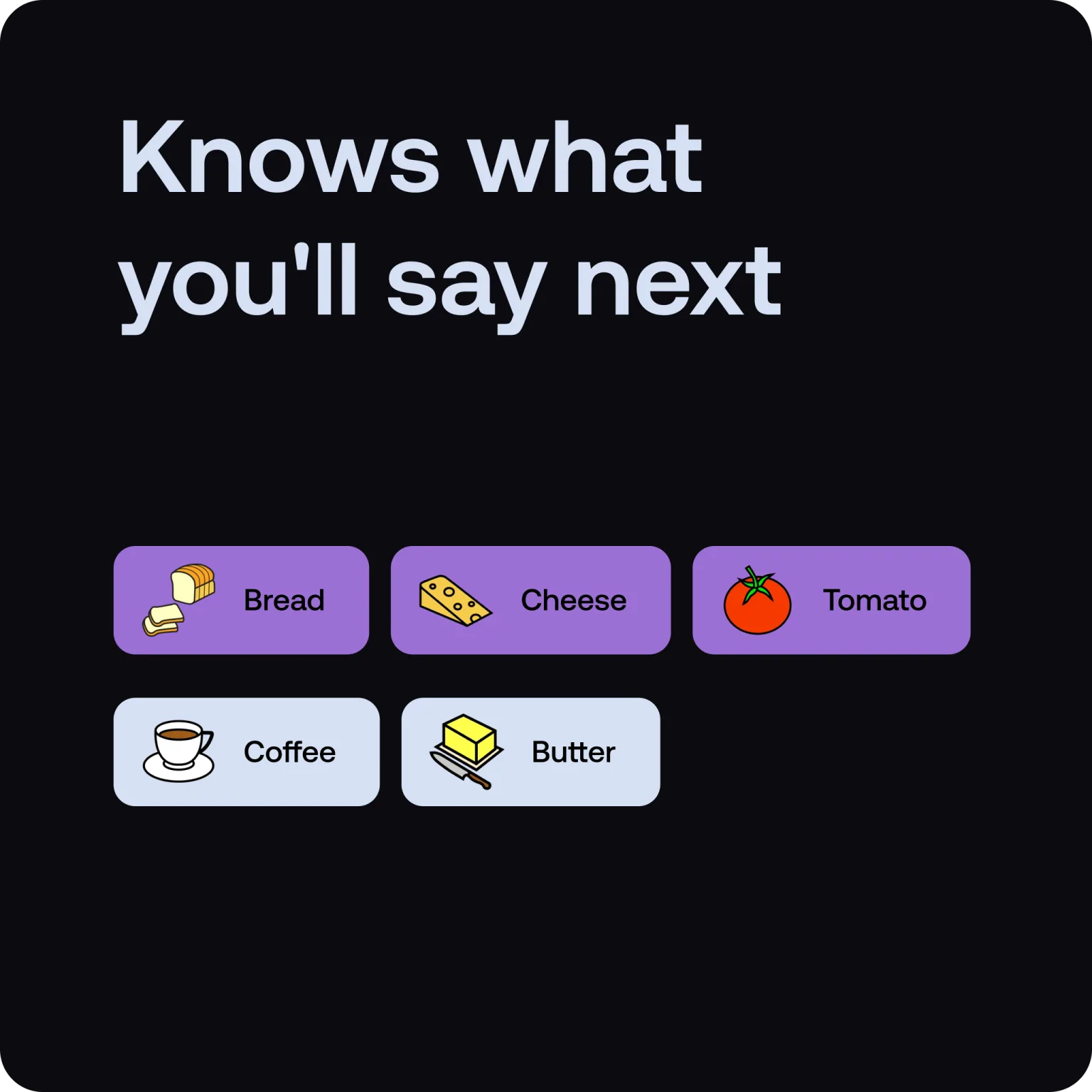
    Talkr learns how you communicate and suggests the next word to speed up everyday conversations.

  • Sync, share, export

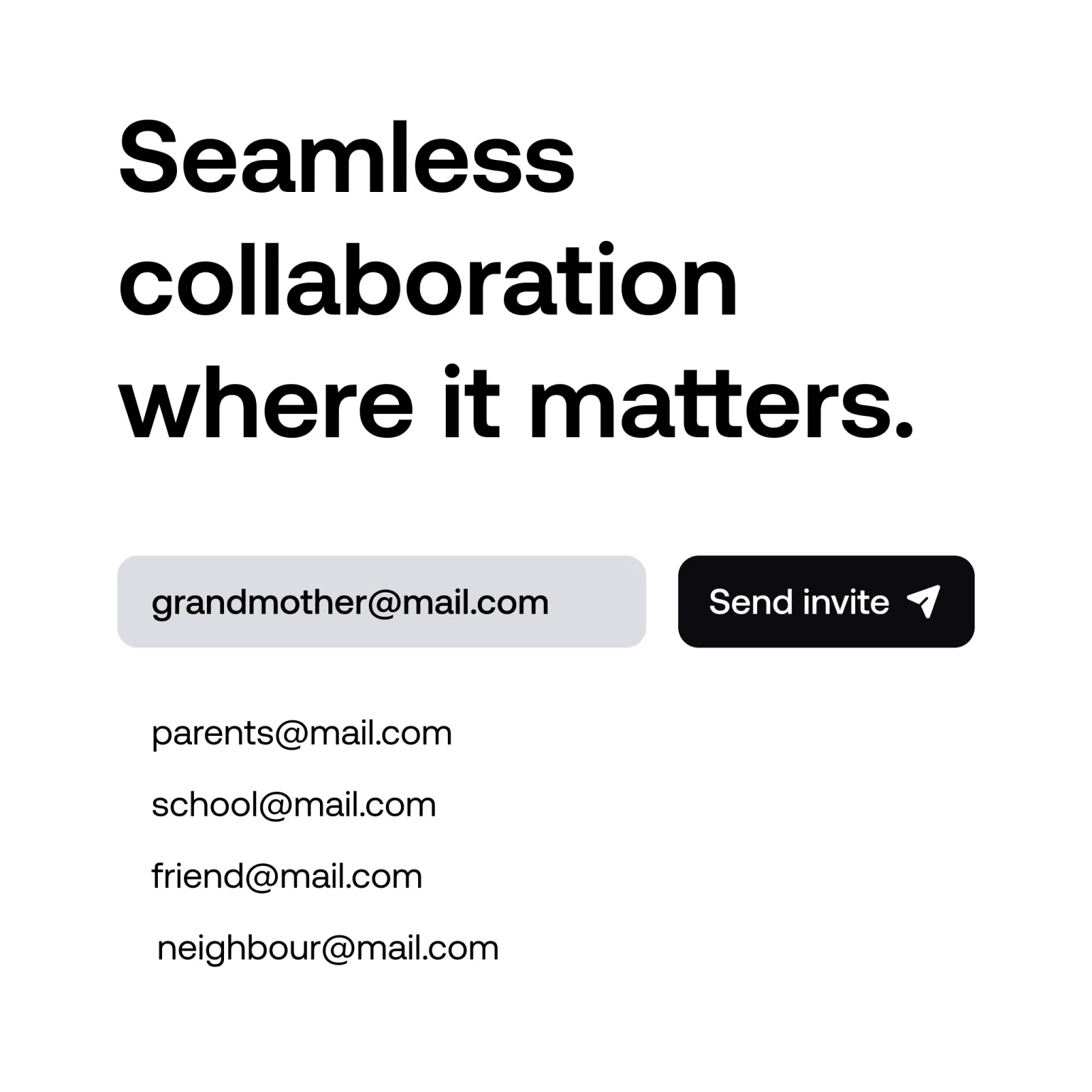
    Boards sync across devices and share with family, teachers, and caregivers. Pro adds printable PDF export.

  • Built for everyone

    Light and dark mode, PIN lock, full offline support, English and Swedish, works on iPhone, iPad, and Android.

See Talkr in action

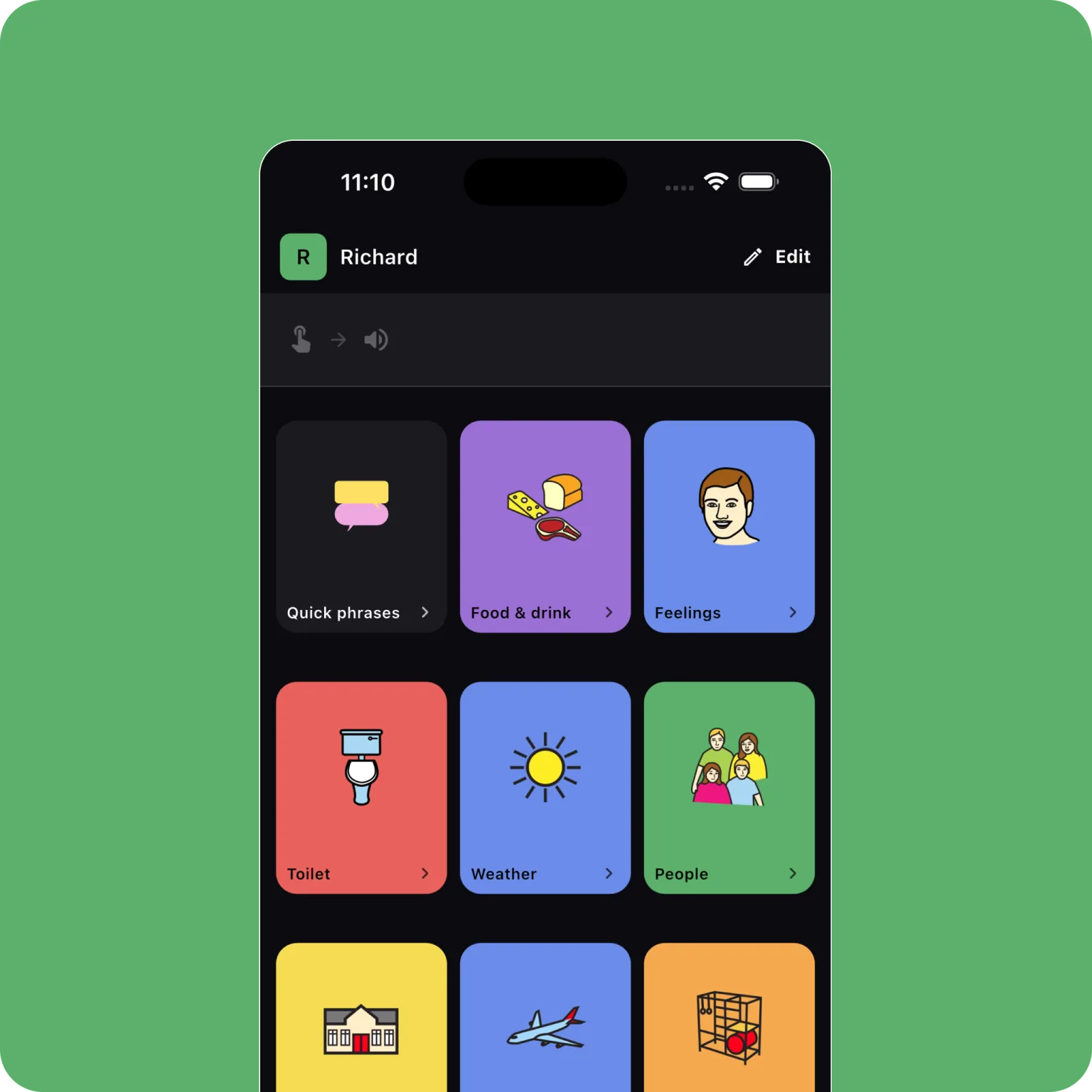
Talkr home screen on iPad with categories like Food & drink, Feelings, and Quick Phrases
Building a sentence on iPad by tapping pictures, with smart next-word prediction

Why I
built Talkr

PixelPappa

“I built Talkr because I couldn’t wait six months for a prescribed AAC device while my daughter sat silent. Communication shouldn’t be gatekept by waiting lists or price tags.”

Björn Rutholm

Founder, parent of an AAC user

Talkr for clinics and educators

Built for daily clinical use

Use Talkr in sessions with multiple clients or students
Build and share custom boards per client or learning goal
Print physical AAC sheets directly from any board
Free to evaluate before recommending it to families

Are you a speech therapist or educator?

Talkr was built so families don’t have to wait for a prescribed device. But we know you’re often the bridge between the family and the right tool.

Reach out and we’ll set you up with a free Talkr Pro account so you can evaluate the app in your own practice before recommending it.

Get Talkr for your clinic

Email talkr@pixelpappa.com with the subject line “Talkr for clinics” and a short note about your practice.

Frequently asked questions

Honest answers to what families, caregivers, and therapists actually ask about AAC. If something’s missing, email talkr@pixelpappa.com and we’ll add it.

Jump to

  • Getting started4
  • Cost & access4
  • How it works7
  • Speech & development4
  • Family & caregivers3
  • For therapists3
  • Privacy & data2

Getting started

Talkr is built so a tired parent can have it working before the kettle boils. You install the app, sign in, pick a starter board that matches your child's level, and start tapping pictures. The app speaks the words out loud immediately.

You can refine vocabulary, add personal photos (a picture of grandma, the family dog), and rearrange buttons later. None of that is required to start communicating today.

You don't need a referral, prescription, or any professional sign-off to use Talkr. Download it, start communicating. That's the whole point of an app-based AAC tool.

If you do work with a speech-language pathologist, mention Talkr to them. Therapists can sign up for a free Pro account and configure shared boards alongside your family. That collaboration usually accelerates progress, but it's optional.

Dedicated AAC devices are purpose-built hardware that does one thing. They're rugged, can be funded through health systems in some countries, and are sometimes the right call for users with specific motor or visual needs that benefit from custom hardware.

For most families, an app on a tablet or phone they already own is the better starting point. It's portable, less stigmatising, and you can replace the device without losing the user's vocabulary if it gets damaged.

You don't have to choose forever. Start with an app to see what fits, and switch later if a dedicated device becomes appropriate.

Talkr works on iOS and Android, on both phones and tablets. Boards sync across devices, so the same setup works on the iPad at home and a phone in the stroller.

Cost & access

Talkr is free to download and free to use. The free tier includes 10 boards and 100 words per workspace, full sync across devices, family and caregiver sharing, voice recording, free cloud backup, and the entire 3,400-illustration library.

Pro unlocks unlimited boards and words, PDF export for printable communication sheets, and a full backup history browser where you can selectively restore individual categories. Pro is 59 kr per month, with discounted annual and lifetime options. You can cancel anytime, no commitment.

We built it this way because AAC pricing in this category traditionally locks families out. A child should have a way to communicate before a finance conversation.

If you cancel Pro, your boards and words don't disappear. Existing content stays on your device and in sync. You drop back to the free tier limits, which means you can still use everything you already built, but new additions follow the free-tier caps until you either renew or remove enough to fit.

We do not hold a child's vocabulary hostage. The contents of a workspace belong to the family that built them.

There's no time-limited trial because there doesn't need to be one. The free tier isn't a teaser version of the app, it's the full Talkr experience with a generous capacity (10 boards, 100 words). No countdown, no card on file, no expiry. Many families never need Pro.

Pro adds capacity (unlimited boards and words), PDF export, and a backup history browser with selective restore. If those matter to you, you can subscribe monthly, annually, or pay once for lifetime, and cancel anytime if it doesn't fit.

Funding for AAC depends heavily on where you live. In Sweden, the public route is förskrivning, which generally covers procured devices and is regional. In the US, some Medicaid programs and private insurers cover dedicated devices but rarely apps. In the UK, NHS pathways exist but are slow.

Because Talkr is an app on a device you already own, it falls outside most traditional funding pathways. The upside is the price is low enough that funding becomes less of a blocker. If you're navigating public-system funding for a dedicated device, Talkr is what most families use while they wait.

How it works

Talkr is built offline-first. Boards, custom words, and the entire illustration library are stored on the device, so the app works without an internet connection from the moment you sign in: in the car, on a plane, in a hospital with no WiFi, in the woods. Sync resumes automatically when you're back online.

Talkr currently supports English and Swedish, including the illustration library search and the text-to-speech voices. We're being deliberately honest about that. Many AAC apps claim multilingual support but ship with poor coverage in non-English languages, which is worse than not offering them at all.

We'll add more languages as we hear demand from families. If your language matters to you, email us and we'll factor it into the roadmap.

Talkr uses modern neural text-to-speech voices that sound natural, not the robotic voices older AAC apps were stuck with. Voice quality matters: it's how your child sounds to the world.

You can also record your own voice, a sibling's voice, or any voice for individual words and phrases. That can be especially meaningful for personal items, names, and family-specific words.

Generic symbols work for general concepts, but the most meaningful vocabulary is personal: your child's actual grandparents, their actual school, their actual cup. Talkr lets you snap a photo, type the word, and add it as a button in seconds.

Custom buttons live alongside the illustrated library and behave the same way. You can also record a custom voice for any custom button.

Sign in with the same account on multiple devices and your boards, custom words, and recordings show up on all of them. Edit on the iPad at home, the words appear on the phone in the stroller. There's no extra cost for sync, and no per-device limit.

Talkr is built to work alongside the accessibility features built into iOS and Android: VoiceOver, Switch Control, Voice Control on iOS, and TalkBack and Switch Access on Android. We test continuously across these and prioritise fixes for any patterns that don't behave as expected, particularly around editing and reordering boards.

Native in-app scanning, eye-gaze integration, and dwell-time customisation are on the roadmap and we'll prioritise them based on what families ask for.

One of the biggest complaints about competing AAC apps is that buttons move when complexity increases. Children build motor patterns (the muscle memory of where to tap to say a word), and when those patterns break, communication slows or stops.

Talkr is designed so adding new vocabulary doesn't shuffle existing buttons. The word your child has been saying for six months is in the same place tomorrow.

Speech & development

This is the most common worry parents bring to AAC, and the research is unusually clear: AAC does not delay speech. Multiple meta-analyses going back to the 1990s show that children who use AAC develop spoken language at the same rate or faster than children who don't.

The intuition behind the worry makes sense. If a child has an easier way to communicate, why would they bother with the harder way? In practice, the opposite happens. AAC reduces frustration, models language pairings (picture plus spoken word), and gives children more chances to communicate successfully. Successful communication is what builds language.

If your child develops speech, they keep it. AAC is a bridge, not a substitute. Many AAC users speak and use the app side by side, choosing whichever works best in the moment.

There are no readiness prerequisites for AAC. A child does not need to demonstrate cognitive skills, sit still for assessment, or hit any milestone first. The only thing required is a need to communicate, which every child has from birth.

Practical signs that AAC will help right now:

  • Fewer spoken words than peers of the same age.
  • Frequent frustration meltdowns, especially around getting needs met.
  • Pointing, leading, or pulling adults to objects to communicate.
  • A clear gap between what your child understands and what they can say.

If any of these sound familiar, you don't need to wait for a formal recommendation. Starting earlier gives more time to build vocabulary and communication patterns.

Children are practical communicators. If saying a word out loud is faster and works, they'll say it. If pointing at a picture is faster and works, they'll do that. Most AAC users move fluidly between speech, gestures, and the app, picking whatever is easiest for the situation.

What you'll typically see is a child using AAC heavily for a period, then leaning more on speech as words come in, then using AAC again for harder topics or when they're tired or overwhelmed. That's the goal: more communication options, not fewer.

AAC is not age-bound. Two-year-olds use it. So do adults recovering from stroke or living with ALS or aphasia. The interface is picture-based and can be made as simple or as complex as the user needs.

For very young children, you'll model the app heavily yourself, just as you'd model speech. For adults who lost speech later in life, the focus is often on faster vocabulary access and preserved phrases. Talkr supports both ends of that range.

Family & caregivers

Talkr is built around shared workspaces. Invite a partner, a grandparent, a teacher, a respite carer, a speech therapist. Everyone sees the same boards. Edits sync. The child's voice is consistent across home, school, and therapy.

Sharing is included free. Most competing AAC apps either paywall this or limit it to a small number of users.

School policies vary. Some districts standardise on a specific AAC system; many are flexible, especially if the parent provides the device. The most reliable approach is to invite your child's teacher or speech therapist into your Talkr workspace so they see the same boards your child uses at home.

If your school requires a different system, Talkr can run alongside it. Children often have one app for school and one for home, which is fine, though most families prefer consistency once they've built a vocabulary they like.

Devices get thrown, dropped, and chewed. We assume that. Everything in Talkr (boards, custom words, recordings) is stored in your account, not just on the device. Get a replacement, sign in, and the same setup is there.

A rugged case is still worth it. We recommend cases designed for kids that protect corners and survive significant drops.

For therapists

Practising SLPs and AAC specialists get a free Pro account. The reasoning is simple: therapists evaluate AAC across many clients and shouldn't have to choose between paying out of pocket or not testing a tool properly.

Email us with your professional credentials and we'll set you up. Therapists can also be invited into a family's workspace and configure boards alongside the family.

Talkr is a new app and doesn't have product-specific peer-reviewed studies yet. What it does build on is decades of established AAC research: symbol-supported communication, the importance of motor pattern stability, the value of aided language modelling, and the relationship between AAC use and speech development.

We'd rather be honest about that than overclaim. If specific evidence for a feature matters to your recommendation process, email us and we'll point you at the literature behind the design choice.

Pro currently includes PDF export of boards, useful for backup, communication partner training, and IEP documentation. Use-frequency reports (which words a user taps most, growth over time) are planned and prioritised based on what therapists tell us they need for their reporting.

If you have a specific reporting requirement (school district, insurance, regional health system), email us. The roadmap responds to actual requests.

Privacy & data

Boards, custom words, and recordings live on your device and are mirrored to our backend so they can sync between your devices and the people you've invited. Workspace contents are not visible to other Talkr users, advertisers, or third parties.

Full details, including provider locations and retention policies, are in our privacy policy.

Account deletion is in the app and on the web. Deleting an account removes your profile, your boards, your custom words, and your recordings from our backend. There's no cooling-off period or hidden retention. We don't sell or share data, and we don't train models on your content.

Get Talkr

Available now on Google Play. iOS is coming soon.

Download on the App Store (coming soon)Get it on Google Play

Available for phone and tablet.

Contact

Email us at talkr@pixelpappa.com.

Privacy Policy

Let's Talk

hello@pixelpappa.com+46 073 819 15 03
WorkServicesAboutTalkr
BlogTrainingContact
© 2019 – 2026 PixelPappaPrivacy